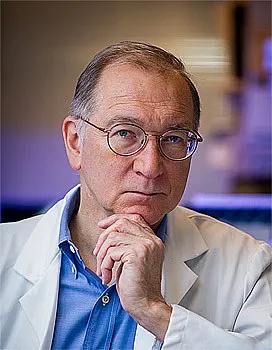
Gordon J. Freeman, PhD
Dana-Farber Cancer Institute
Dana-Farber Cancer Institute
My laboratory studies the role of costimulatory signals in the development of an immune response. T cell activation requires two signals. Specificity is provided by TCR recognition of peptide-MHC complexes but a second, costimulatory signal is required for full T cell activation. The B7 gene family, comprised of B7-1 and B7-2, provide the critical costimulatory signal for full T cell activation, clonal expansion, and development of effector function through their interaction with CD28 on T cells. After T cell activation, the interaction of B7-1 and B7-2 with the higher affinity ligand, CTLA4, expressed on activated T cells, leads to down-regulation of T cell activation. Stimulation of the TCR alone leads to T cell clonal anergy thus blockade of B7-1 and B7-2 can be used to establish antigen-specific tolerance for transplantation or the alleviation of autoimmunity. Conversely, expression of B7-1 and B7-2 can stimulate an immune response and the introduction of B7-1 or B7-2 into tumors can stimulate an anti-tumor response leading to tumor rejection and anti-tumor immunity. Recently, we have cloned two novel members of the B7 gene family. These new B7s bind to receptors expressed on activated T cells and further regulate the development of an immune response. We are currently focusing on the function of these novel B7 genes and their interactions with the B7/CD28-CTLA4 pathway.
Gordon J. Freeman, PhD
Dana-Farber Cancer Institute